
Most writers have a rough sense of their characters before they start writing. What they look like, maybe. How they speak. Their name.
But a rough sense isn’t enough. Characters who only exist in your head tend to behave inconsistently on the page. They’ll say things that don’t fit their backstory, make decisions that undermine their established motivation, or shift personality between chapters without any internal logic.
A character profile fixes that. Not by boxing your character in, but by giving you a reference point solid enough to push against.
What Is a Character Profile?
A character profile is a document where you record everything you know about a character. It’s a working resource, something you return to during drafting, not something you write once and file away.
The depth you go to depends on the character. Your protagonist probably needs a full profile. Secondary characters might need just a page. Background characters might not need one at all.
The goal isn’t comprehensiveness for its own sake. It’s clarity about who this person is, specifically the things that drive their behaviour and shape their choices.
Writing Desk tip: Store profiles in the character notes area in the Resource Hub, kept alongside your outline and scene-by-scene draft, so you can reference a character’s core traits while you’re actively writing their scenes without flipping between documents.
What to Include in a Character Profile
Basic Information
- Full name, including names they go by, names they’ve been called, names they’ve changed
- Age
- Physical description, kept specific to what actually matters: hair colour is fine, but what would stand out in a crowd is more useful
- Occupation or role in the story
- Where they live and grew up
Backstory
- Key childhood experiences: what shaped them? Not a complete biography, just the specific moments that made them who they are
- Defining trauma or loss: most compelling characters have something they’re still carrying
- Relationships that formed them: parents, siblings, early friendships, formative romantic relationships
- The moment things changed: the turning point in their life before the story begins
Psychology
- Core belief: what do they believe about the world, and about themselves? This is their worldview, often formed in response to their backstory
- Core fear: specific, not “failure” but “becoming my father”; not “loneliness” but “discovering that no one would notice if they disappeared”
- Desire: what do they want more than anything? The general version (“they want love”) is less useful than the particular one (“they want the person who hurt them to admit they were wrong”)
- Need: what do they actually need, as opposed to what they want? These are often in tension, and that tension is often the story
- Contradictions: where does this person surprise you? What do they believe that sits awkwardly alongside something else they believe?
Personality and Behaviour
- Core traits (see the character traits list for a full working reference)
- Core flaw: the quality that creates the most trouble for them and others
- How they speak: word choice, rhythm, what they say and what they don’t
- What they do under pressure: people reveal themselves in crisis
- What they want others to think of them, and how that differs from who they actually are
Story Role
- Their arc: how do they change across the story, and who do they come out as?
- Their relationship to the protagonist, if they’re not the protagonist: what do they want from or for them, and how does their presence complicate things?
- Their secrets: what do they know that others don’t, and what don’t they know about themselves?
The Character Profile Template
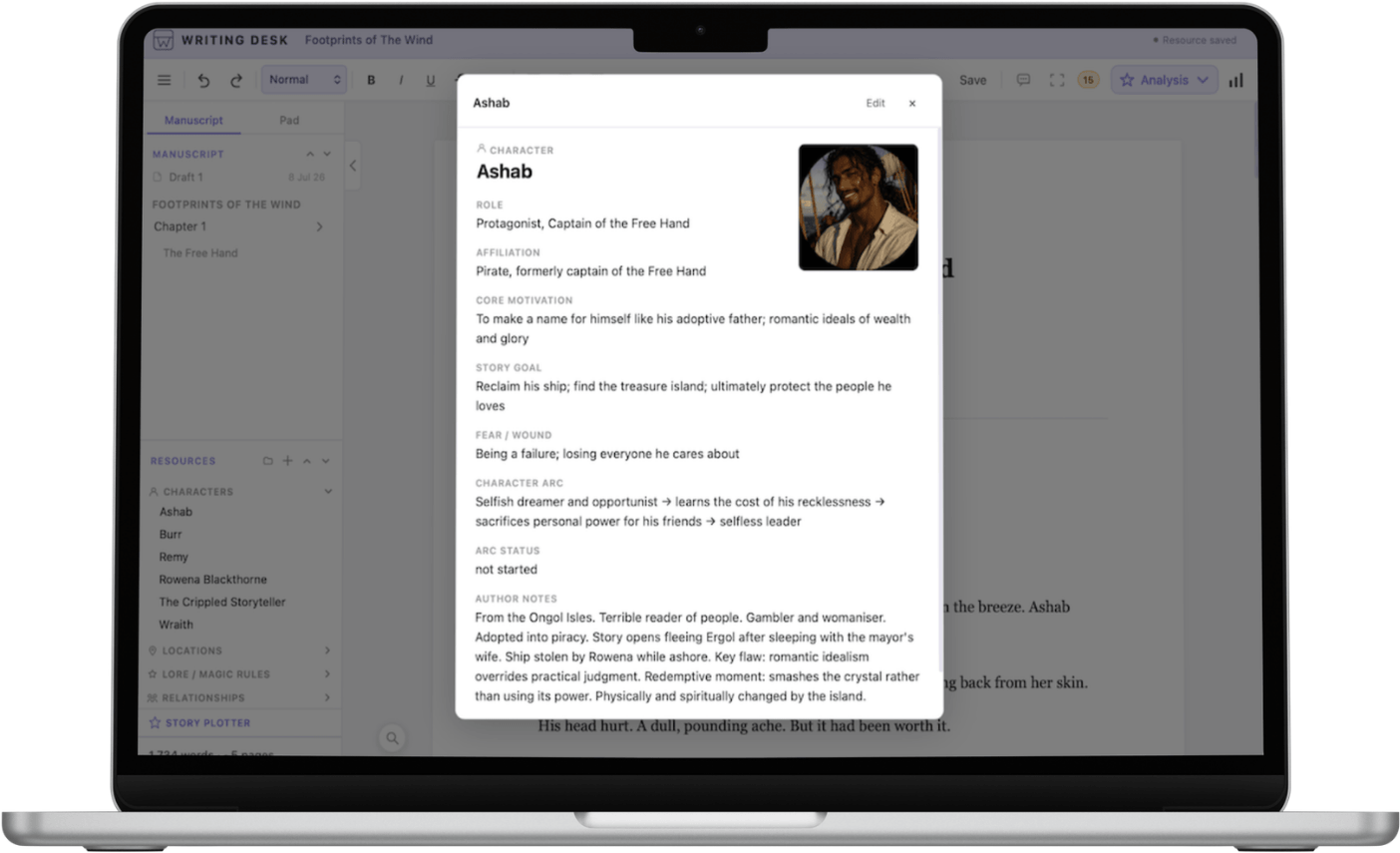
A stripped-down version you can adapt directly:
Character name: / Age: / Role in story:
Physical description:
Where they’re from: / Occupation:
Backstory:
- Formative experience 1:
- Formative experience 2:
- The wound they’re still carrying:
Psychology:
- Core belief:
- Core fear:
- What they want:
- What they need:
- Key contradiction:
Personality:
- Defining traits (2 to 3):
- Core flaw:
- Voice and speech patterns:
- Under pressure, they:
Story arc:
- Where they start:
- What they go through:
- Who they become:
Secrets:
Key relationships:
Using a Profile Without Losing Spontaneity
The most common worry about character profiles is that they’ll kill the feeling of discovery, that knowing a character too well means never finding anything out while writing them.
In practice, the opposite tends to be true. Characters with well-developed profiles feel more alive on the page, not less, because the writer knows their history and psychology well enough that the character’s reactions to events feel grounded. Surprising, but earned.
The profile isn’t a script. It’s a map. And having a map doesn’t stop you from wandering off the path, it just means you know where you are when you do.
Final Words
If you want your characters to feel irresistible, you need to fully understand what drives them, how they react in particular situations, and what they’re afraid of. Not having answers to these questions, or ignoring them, often results in characters acting out of character. It makes it harder for readers to connect, and can produce a jarring reading experience where a character seems to be doing something simply because the plot requires it.
Related reading:

The writing app built for novelists.
Plot, draft, edit, and format your manuscript in one private, local app for Mac. Free to download. Your writing never leaves your machine.
macOS 13 Ventura or later · No account required