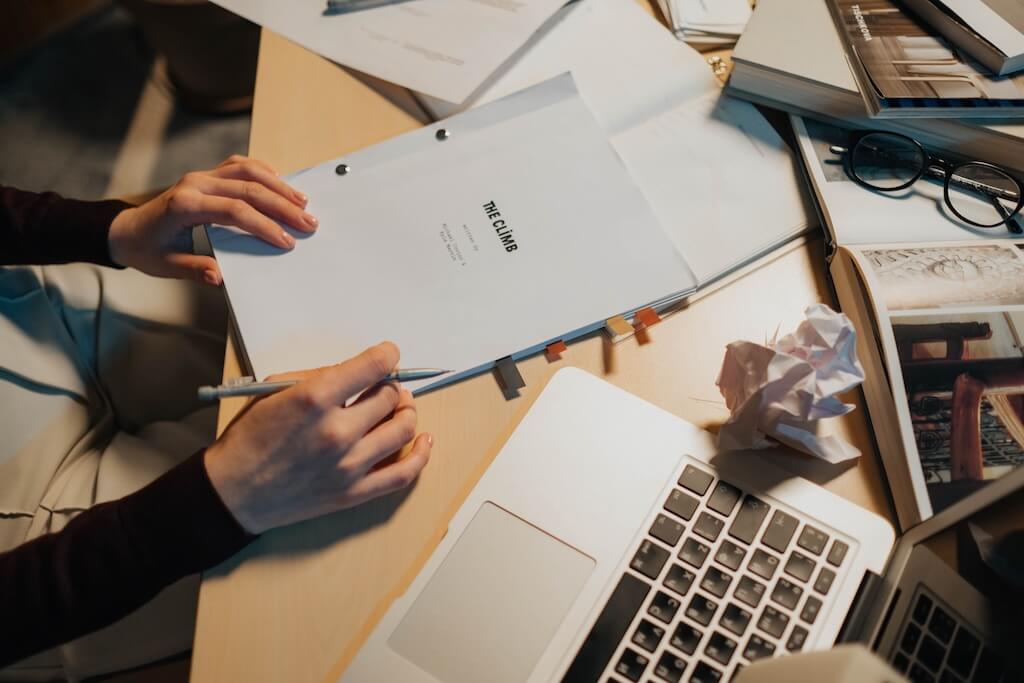
A developmental editor works on the big-picture problems in a manuscript: structure, pacing, character arc, plot holes, point of view, whether the story works as a whole. The shape of the thing underneath the prose, rather than the sentences or the typos.
That distinction matters, because “editing” gets used as one word for several different jobs, and hiring the wrong one for where your manuscript is wastes both your money and the editor’s time.
The Editing Hierarchy
Four different jobs, roughly in the order a manuscript moves through them.
Developmental editing. Structure, pacing, character arc, plot logic, point of view consistency, whether the ending earns what came before it. This happens on a manuscript that’s finished in draft but hasn’t been polished, because there’s no point polishing sentences in a chapter that might get cut.
Line editing. Sentence-level craft: rhythm, word choice, showing versus telling, dialogue that sounds distinct. This is the same territory as your own line pass, done by someone with professional distance from the manuscript.
Copyediting. Grammar, consistency, house style, continuity errors, the kind of thing a style sheet is built to catch. Concerned only with whether the manuscript is correctly and consistently written, separate from whether the story works.
Proofreading. The final pass before publication or submission. Typos, formatting errors, the last layer of technical polish.
Hire a copyeditor before the structure is settled and they’ll polish sentences that get cut in a later revision. Hire a developmental editor after you’ve already paid for a line edit and you’ve paid twice for work the second pass will undo. The order exists for a reason.
What You Get
An editorial letter: a document, often several pages, walking through what’s working, what isn’t, and why, organised around the manuscript’s biggest structural issues rather than a chapter-by-chapter list. Many developmental editors also annotate the manuscript directly with margin notes at the specific points where an issue shows up, so the editorial letter’s big-picture points connect to concrete moments on the page.
Some developmental edits include a follow-up call to talk through the feedback. Worth asking about upfront if that matters to you, since it varies by editor.
You’re paying for a diagnosis. The revision itself, the actual rewriting, stays entirely yours to do.
Do You Need One?
Some manuscripts need a professional developmental edit more than others, and the right stage to bring one in varies across a writing career.
Signs it’s worth it: You’ve self-edited and had beta reader feedback, and something still feels off in a way neither you nor your readers can quite articulate. Vague feedback like “the middle drags” or “I lost interest around chapter twelve” without a clear reason why is exactly the kind of problem developmental editing is built to diagnose. It’s also worth it if you’re writing in a genre with structural conventions you’re less confident about, a debut thriller writer working outside their usual genre, for instance, where an editor who knows the genre’s expectations can catch things a general reader wouldn’t flag.
Signs it can wait: If you haven’t done a structural self-edit or gathered beta reader feedback first, a professional edit is likely to surface the same issues those steps would catch for free. Get as far as you can on your own first. A developmental edit is most valuable when it’s solving a problem you can’t solve yourself. Try the earlier steps first.
What It Costs
Rates vary a lot, by manuscript length, editor experience, and how quickly you need it back. It’s a real budget line if you’re planning a self-published launch, worth mapping against the rest of your costs rather than treating in isolation. The full breakdown lives in what self-publishing costs, alongside the other line items, cover design, formatting, ISBNs, that make up the total.
How to Find One
Look for editors who specifically list your genre. Developmental editing for literary fiction and developmental editing for genre romance are different skill sets, structural conventions differ enough that genre familiarity matters more here than in copyediting. Ask for a sample edit on a few pages before committing to the full manuscript, it tells you more about fit than a portfolio alone, and many professional editors are happy to offer one. References from other authors in your specific genre are worth more than general reviews.
Writing Desk tip: The AI Editor’s developmental lens gives chapter-by-chapter structural feedback as you write or revise, catching pacing and structure issues early and often, before a manuscript goes anywhere near a professional editor. What it does is get the manuscript further along on your own first, so when you do bring in a professional, you’re paying them to solve the problems that were hard to see from inside the story, the ones an earlier pass would already have caught, rather than duplicating that work. It’s a step before a human developmental editor, not a substitute for one.
Final Words
Developmental editing solves a specific problem: structural issues that are difficult to see from inside your own manuscript, however many self-edit passes you run. It’s a later step, valuable at specific points in a manuscript’s life rather than at every stage. But when self-editing and beta reader feedback have taken you as far as they can and something still isn’t landing, it’s the thing that can move a manuscript forward.
Related reading:
- How to Self-Edit Your Novel Before Sending to a Beta Reader
- Cost of Self-Publishing: What It Takes to Budget For
- Self-Publishing vs Traditional Publishing
Choosing writing software? See the best editing and proofreading software.
The writing app built for novelists.
Plot, draft, edit, and format your manuscript in one private, local app for Mac. Free to download. Nothing leaves your Mac unless you choose to sync it.
macOS 13 Ventura or later · No account required