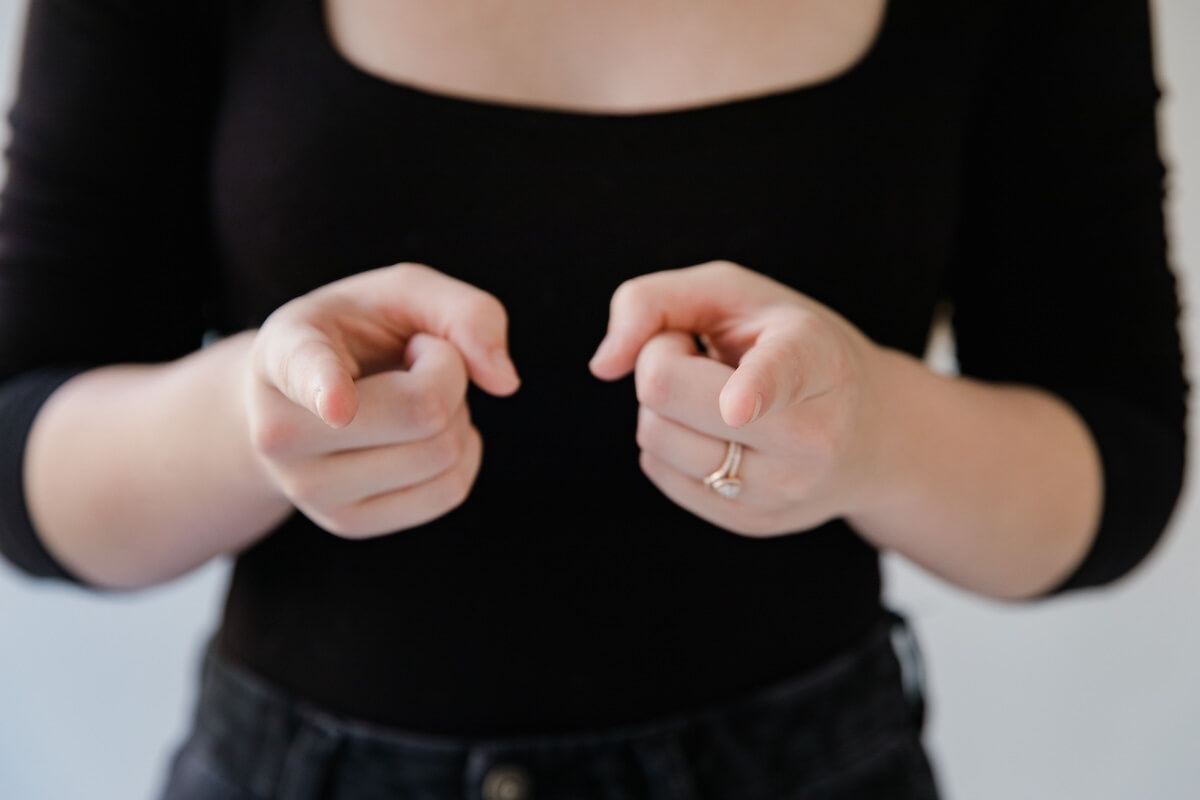
Every person has a physical vocabulary, the small, habitual gestures and movements that are uniquely theirs. The friend who touches their neck when they’re nervous. The colleague who taps a pen three times before speaking. The family member who laughs with their whole body.
These are mannerisms. And in fiction, they’re one of the most efficient tools for making a character feel real.
What Are Character Mannerisms?
Mannerisms are the repeated, characteristic physical behaviours that distinguish one character from another. They’re separate from a character’s personality traits (which describe their psychology) or their voice (which describes how they speak). Mannerisms are physical, they live in the body.
They work on a simple principle: physical specificity creates the impression of a real person. Abstract descriptions (“she was nervous”) tell us about a state. Physical mannerisms (“she pressed her thumbnail into the pad of her index finger and held it there”) show us the person behind the state.
Types of Mannerisms
Nervous mannerisms, Things characters do when they’re anxious or under pressure. Tapping, fidgeting, self-touching, over-explaining, going very still.
Habitual physical tics, Things characters do without thinking. Tilting their head when listening. Clicking their knuckles before speaking. Pushing their glasses up even when they’re not there.
Speech mannerisms, Patterns in how they talk. Trailing off mid-sentence. Starting sentences with “Look, “. Never finishing a thought without checking the other person’s face.
Reactions, How they physically respond to specific situations. Do they go quiet or loud when angry? Do they lean forward or pull back when interested?
Comfort behaviours, What they do when they feel safe. Where they put their hands. How they sit. What they reach for.
How to Use Mannerisms Effectively
Assign them deliberately, not randomly. The best mannerisms emerge from character psychology. A character who grew up in a chaotic home might go physically still in moments of tension, stillness was safety. A character who was always overlooked might speak loudly as a default, even in intimate situations.
When a mannerism connects to backstory or emotional logic, it does double duty: it distinguishes the character and reveals something about them.
Be consistent, but not mechanical. A mannerism should recur enough that readers recognise it, but not so mechanically that it becomes a tic they start dreading. Every three or four scenes is a rough guide. Use it at moments of emotional significance.
Vary the context. The same mannerism can mean different things in different situations. A character who always straightens their cuffs might do it when they’re anxious, when they’re buying time, or when they’re about to say something they know will land badly. Same behaviour, different emotional register. Readers will start to read the cue.
Don’t use them in every scene. Mannerisms are most effective when they’re present but not constant. Overuse turns them into stage directions. Restraint makes them meaningful.
Mannerisms in Dialogue
Physical mannerisms are especially useful in dialogue scenes, where you need to break up speech without just writing “[character] said.” Instead of dialogue tags, a mannerism can do the attribution work while also telling us something about the character’s emotional state in that moment.
“I don’t know what you want me to say.” She pressed her thumbnail into her palm and held it there.
That’s more specific than “she said nervously”, and more real.
Tracking Mannerisms in Writing Desk
One of the most common consistency issues in long manuscripts is mannerisms drifting or multiplying, a character who taps their foot in chapter three is cracking their knuckles in chapter twelve, and the original detail has been forgotten entirely.
Writing Desk tip: Record each character’s specific mannerisms alongside their profile in the character notes, and reference it directly while you’re in draft mode. Small things like this are exactly what separates a good draft from a polished one.
Mannerisms are small. But the specificity they bring to a character is not. Get them right, and your readers will feel like they’re watching real people move through the world, not characters on a page.
Related reading:
The writing app built for novelists.
Plot, draft, edit, and format your manuscript in one private, local app for Mac. Free to download. Your writing never leaves your machine.
macOS 13 Ventura or later · No account required