The first novel I wrote, I approached with the gung-ho arrogance of a fresh English literature graduate. That’s what I was, after all. The idea, in short: what would happen if you trapped a cannibal in a hyper-realistic virtual reality where there were no consequences for his cannibalism? Writing it was great fun.
The problem was what I ended up with. Not, by any measure of the word, a novel. It was a disparate collection of subplots, irrelevant tangents, and exciting scenes sandwiched between exposition, with rules for my own world that were incoherent at best. I spent months trying to edit it into some kind of structure before eventually deciding it was impossible. If I was going to write something someone might, at least loosely, call a novel, I needed a different approach entirely.
The second novel, I outlined. Not perfectly. The plan fell apart by the midpoint, and I restarted, pivoted, and rewrote it twice from scratch. But I finished the book. No literary masterpiece, but worlds better than attempt number one. Book three was equally challenging. Book four took four months to write, rather than the two years of book two or the twelve months of book three. There was no secret trick to this. I’d simply discovered, the hard way, that it’s much easier to rewrite an outline than it is to rewrite a novel. Much easier to take your characters somewhere if you know each of them inside and out.
I’m not here to tell you that you must outline, or that pantsers are doing it wrong. Some writers genuinely work better without one. But if you’ve ever stalled out at 30,000 words and not known why, or finished a draft only to discover the thing is structurally an irredeemable mess, an outline would have caught that. This guide is for you.
What Is a Novel Outline?
It’s a plan for your story before, or sometimes during, your draft. It can be half a page of bullet points or a twenty-page scene-by-scene breakdown, whatever gives you enough to write with confidence and not so much that you’re too rigid to let the story breathe.
The important thing: your outline will change. Mine always do. You write toward the story you planned and end up somewhere better. That’s fine. That’s the point. The outline isn’t the destination, it’s the runway.
Do You Need One?
Depends. If you finish drafts, feel free to skip this article. But if you regularly get stuck, lose momentum, or reach the end and find the structure doesn’t quite work, you probably need more of a plan than you think.
Most writers who call themselves pantsers are still planning, they’re just doing it in their heads rather than on the page. Writing it down forces you to reckon with the problems before you’ve spent six months drafting around them.
The Building Blocks of a Novel
Before you pick a method, get clear on three things. Every outline, however loose or detailed, needs to address these.
What does your protagonist want, and what’s in the way? This is your story’s engine. If you can’t answer it in a sentence, you’re not ready to outline yet. Go back and sit with your character until you can.
What does the ending look like? Not every detail, but roughly: does your protagonist get what they want? At what cost? How are they different from who they were at the start? I can’t stress this enough, know where you’re going before you plan the middle. The middle is where novels die, and it’s almost always because the writer doesn’t have a destination.
What are your turning points? Four or five moments that change the direction of your story. The point of no return. The revelation that reframes everything. The darkest moment before the push to the end. These are your structural anchors. Everything else is connective tissue.
Five Methods of Structuring a Novel
I’ve tried most of these. Here’s what each is actually good for, without the evangelism.
Three-Act Structure
The foundation most other methods are built on. Act One establishes your world and conflict. Act Two escalates it, complications, setbacks, your protagonist’s worst moments. Act Three resolves it.
It sounds simple because it is. Three-act structure works across almost every genre because it mirrors the shape of how stories feel satisfying to readers. If you don’t know where to start, start here.
Use it if: you want a clean framework that won’t get in your way.
The Hero’s Journey
Campbell’s framework tracks a protagonist who leaves their ordinary world, survives trials in an unfamiliar one, and comes back transformed. It’s the backbone of myth, fantasy, and adventure, and a huge proportion of commercial fiction beyond that.
What I like about the Hero’s Journey is that it takes character transformation seriously. It’s not just a plot structure, it’s a map of how people change. If your story is fundamentally about who your protagonist becomes, it’s worth learning.
Use it if: you’re writing fantasy, sci-fi, or any story built around a clear transformation arc.
Save the Cat Beat Sheet
Blake Snyder’s screenwriting framework, adapted for novels. Fifteen named beats across three acts, with rough guidance on where each should fall. It’s the most prescriptive method on this list. Some writers find that liberating, a template to fill in rather than a blank page. Others find it restricting.
I’ve not used Save the Cat properly myself, I fall into the too-restrictive camp. But I have retroactively mapped the beats onto my stories and found it a solid tool for diagnosing why some sections fall flat.
Use it if: you’re writing commercial genre fiction and want clear structural scaffolding.
The Snowflake Method
Randy Ingermanson’s method starts with a single sentence that summarises your whole novel, then expands outward, sentence to paragraph, paragraph to page, page to scene list. It’s methodical and slow, and for the right kind of writer, it’s genuinely useful as a way of building complexity without getting overwhelmed.
It’s another one I’ve never been able to fully commit to. But the one-sentence summary step from the Snowflake Method is a great place to start a novel. If you can distil the essence of the story into a single sentence, it helps bring you back on track should things go sideways at the halfway point.
Use it if: you think architecturally, or you feel paralysed by the scale of a novel and need a structured warm-up process.
Free-form Notes
Not all planning is structural. Some writers do character histories, thematic questions, a rough sequence of things that need to happen. It’s less an outline and more thinking on paper. For pantsers, this is often enough, just enough shape to hold the story together without constraining how it unfolds.
Use it if: you tried structured outlining and it killed your enthusiasm. Some plan is still better than none.
How to Write a Story Outline
Here’s the process I follow now. Take what’s useful.
Start with your protagonist. One sentence: who they are, what they want, what’s stopping them. If you can’t get this down, don’t proceed. The outline can’t compensate for a character you don’t understand yet.
Write down where you’re trying to get to. You don’t need a fully cooked ending, but figure out what, by the end of the story, the character has learned, what it’s cost them, and how they’ve changed.
Identify your turning points. This is where having a prescribed structure really helps, since it gives you an idea of roughly where in your story the big turning points should land. Inciting incident, midpoint, dark night of the soul, climax, resolution.
Needs, wants, and complications. This is about the driving force of the story. I like to think about it as character motivation here. What do they want, and what are they willing to do to get it? That core tension is what carries the next hundred thousand words, so it needs to be rich.
Add texture. With the above, you have the broad sweeps. Next is building character sheets, writing up backstories, fleshing out the world-building. Often I’ve done most of this in my head already, and it’s just about getting it down on paper, locking in the specifics. These are the elements that add colour to the page and depth to the narrative.
Make a scene list. The final step is going through the story chapter by chapter, scene by scene. I get quite granular here. Each core scene gets a summary. Who are the characters in this scene? Where is it set? What do they want? What is the core conflict?
Then start writing, and adjust as needed.
My planning process is far from perfect. Generally, about halfway through, I end up having diverged from my plan significantly. At which point I take a step back, pull apart the original plan, see if it still fits, and, if needed, fully rewrite the scene-by-scene structure.
Novels are alive as you write them. Unexpected things happen. Great ideas fall apart. Your characters will surprise you. So be flexible.
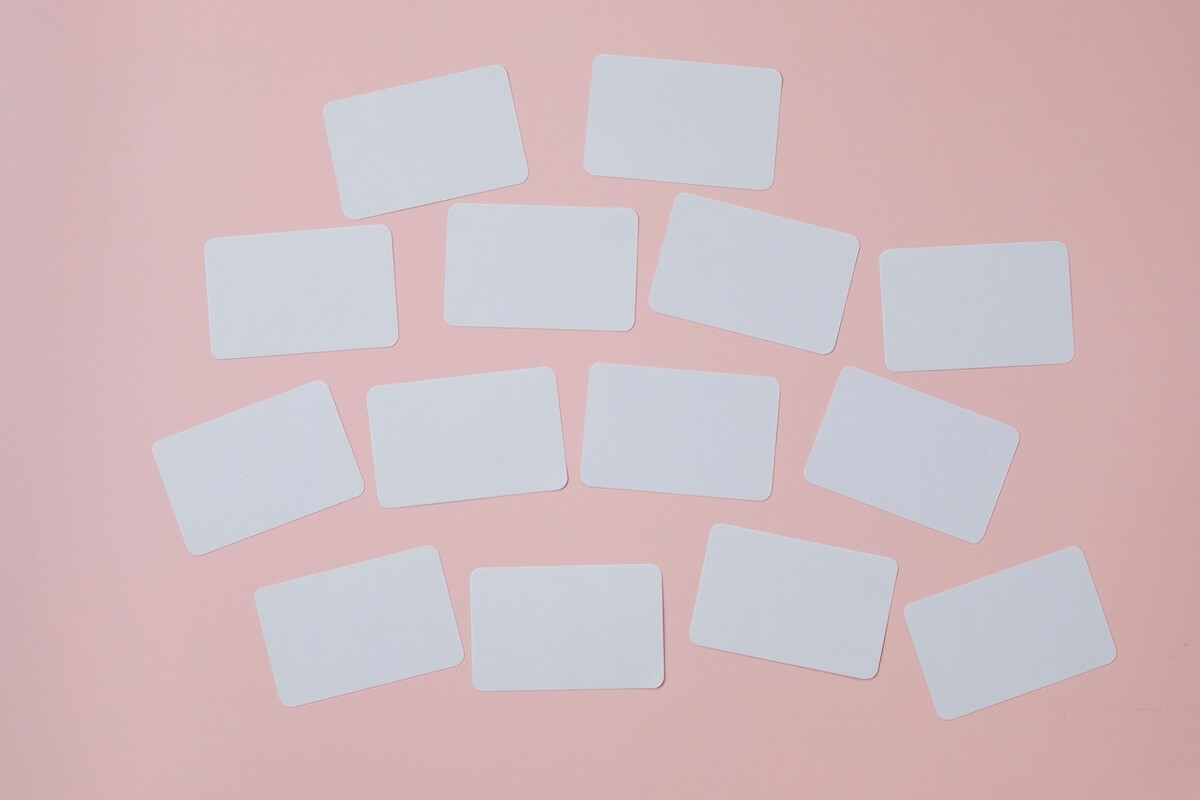
Writing Desk tip: The Story Plotter is where I plan my own novels now. Work in Doc view for a linear, prose-style outline, useful for freeform planning or the Snowflake Method, or switch to Board view for a card-based layout that lets you see the shape of your story at a glance and move scenes around when the structure isn’t working. There are eleven built-in structure templates, so you can start from a framework rather than a blank screen: select one and the beats are placed for you, then you fill them in. Timeline view lets you track subplots, character arcs, and relationships alongside the main outline, so nothing gets left dangling.
How to Write a Novel
We’ve talked about outlining and developing characters, and there are guides here on structuring scenes and chapters, creating tension and conflict, and all of that is great. If you’re reading this, you’re already doing more than most.
But writing a novel is not the same as having a great idea, or even the same as outlining one. There is only one way to write a novel. You have to sit down and write it.
It’s a long process. The main thing you need is not great talent, magnificent genius, or more notepads filled with ideas. The main thing you need is staying power. It’s habit. It’s obsession. You have to write every day, even when you don’t feel like it, and trust me, there will be days, weeks even, where you really don’t feel like it. After a long day of work, you need to clear your head, change gears, and spend an hour just writing. Every day. For between three and six months.
A couple of tricks I’ve found that help:
Have a dedicated space. Somewhere without distractions.
Create a ritual. For me, I shower, make myself a mug of mint tea, rearrange my desk into a set format, put on my writing playlist, open the Writing Desk app, and get to it.
No excuses. I don’t write on Fridays or Wednesdays. Every other day, after work, even if it’s just a single sentence, I go through my ritual above and sit down for about an hour.
Final Words
Writing a novel is fun, exhausting, and incredibly rewarding. It requires dedication, imagination, and a whole bucket load of persistence, and everyone does it differently.
I’ve outlined a lot of the tricks I’ve picked up. But ultimately you need to find what works for you, and the only way to do that is to sit down and get the words out.
If you want to write a novel, Writing Desk is a distraction-free local writing app for Mac. The core writing environment is entirely free, and everyone gets a free 30-day trial of Pro.
FAQs
How long should a novel outline be?
However long it needs to be to give you confidence. Half a page is fine. Twenty pages is fine. The length isn’t the point.
Should I outline before or after a first draft?
Both work. Outlining your existing draft before a second pass is one of the most useful revision tools there is, it shows you the structure you actually have versus the one you intended.
How long should a chapter be?
Up to you. Some writers don’t have chapters at all, Terry Pratchett for one. Some writers make every scene its own chapter. For myself, I tend to make chapters around 3,000 words with two or three scenes each. I aim for consistency, since it helps the pacing feel steady from chapter to chapter.
I’m a pantser. Can I still use this?
Yes. You don’t need a full outline, just enough to avoid losing the thread: your protagonist’s goal, three to six major turning points, and your ending. That’s often enough to avoid the structural disasters that derail unplanned drafts. If you’ve never gotten lost at the 30,000-word mark, you don’t need this. If you have, try it once and see.
Can I change my outline mid-draft?
Constantly. No first idea comes fully formed. Things will reveal themselves about your story and your characters as you write them. Update and evolve your outline as you go, just don’t let planning or re-outlining stop you from actually writing the story.
Related reading:
The writing app built for novelists.
Plot, draft, edit, and format your manuscript in one private, local app for Mac. Free to download. Your writing never leaves your machine.
macOS 13 Ventura or later · No account required